02/VaaniDesk·v1.0.1
VaaniDesk
Multilingual AI Customer Support Platform
- status
- v1.0.1
- role
- engineering
- focus
- agents / RAG / security
- tests
- 206 · 113 evals · 14 E2E
- security
- 40 critical evals · 0 failures
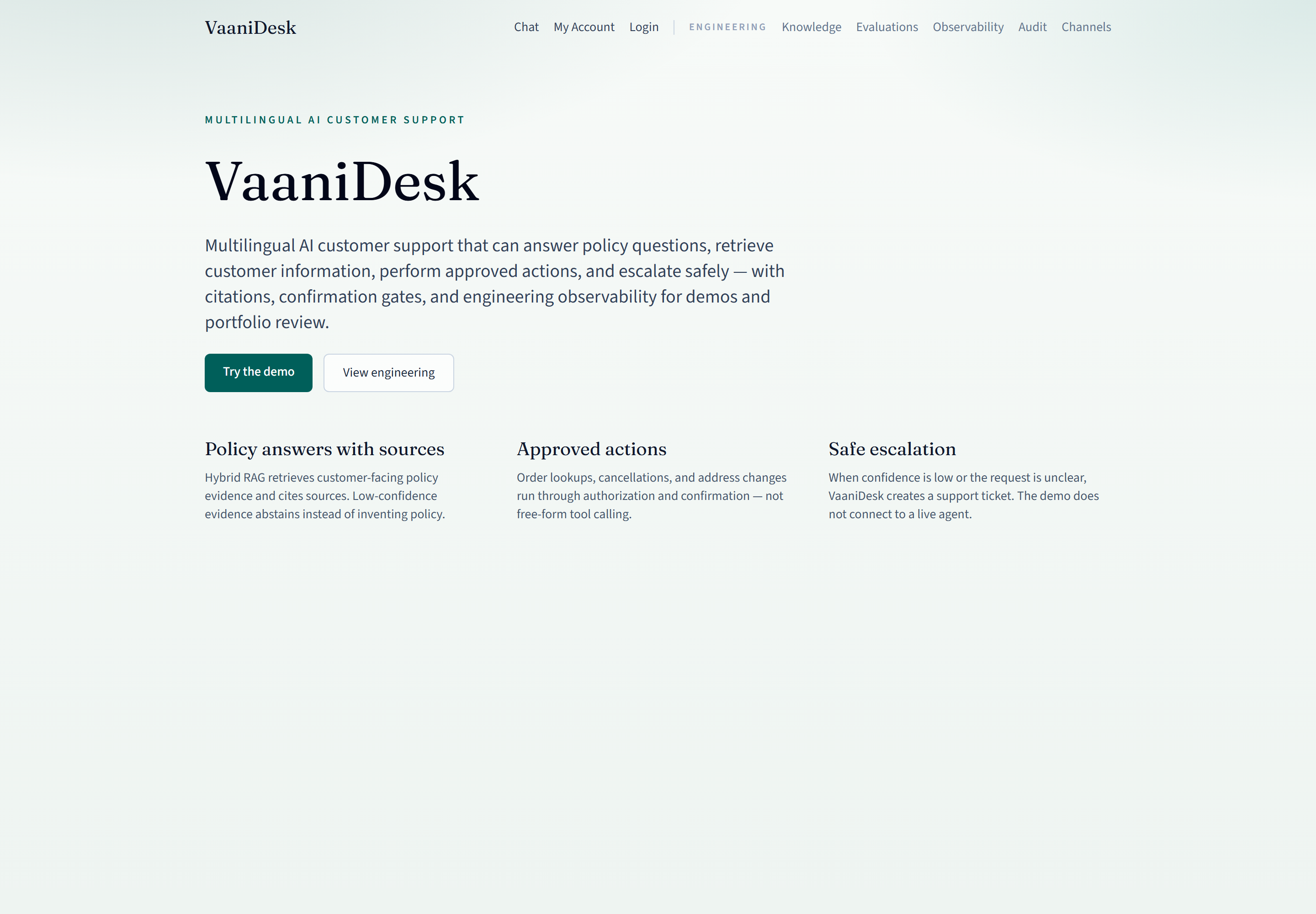
A production-oriented customer support system for multilingual conversations, controlled business actions, access-controlled knowledge retrieval, and secure customer workflows.
overview
VaaniDesk is a production-oriented multilingual AI customer support platform. It combines model intelligence with controlled tool execution, hybrid retrieval with source citations, evaluation coverage, and security controls suitable for real operational workflows.
problem
Customer support systems that bolt a chatbot onto an API often fail in production: uncontrolled tool calls, weak language coverage, missing citations, no evaluation harness, and thin security around sensitive actions. VaaniDesk addresses those failure modes as first-class engineering constraints rather than afterthoughts.
architecture
The system is organized as layered services: client interfaces, API and agent orchestration, an intelligence layer for multilingual routing and retrieval, and a data/infrastructure foundation on PostgreSQL, Redis, and Docker.
Architecture overview
Client interfaces
- Web console
- Support channels
- Operator tools
API & orchestration
- FastAPI
- Controlled agent runtime
- Tool gateway
Intelligence layer
- Multilingual LLM routing
- Hybrid RAG + citations
- Evaluation harness
- Optional STT/TTS (credential-dependent)
Data & infrastructure
- PostgreSQL + pgvector
- Redis
- Observability
- Docker
External LLM, STT/TTS, SMTP, and WhatsApp providers are optional and credential-dependent. Local and CI paths use deterministic providers/simulators. MCP and dedicated vision pipelines are not part of the shipped v1.0.1 surface.
multilingual customer support
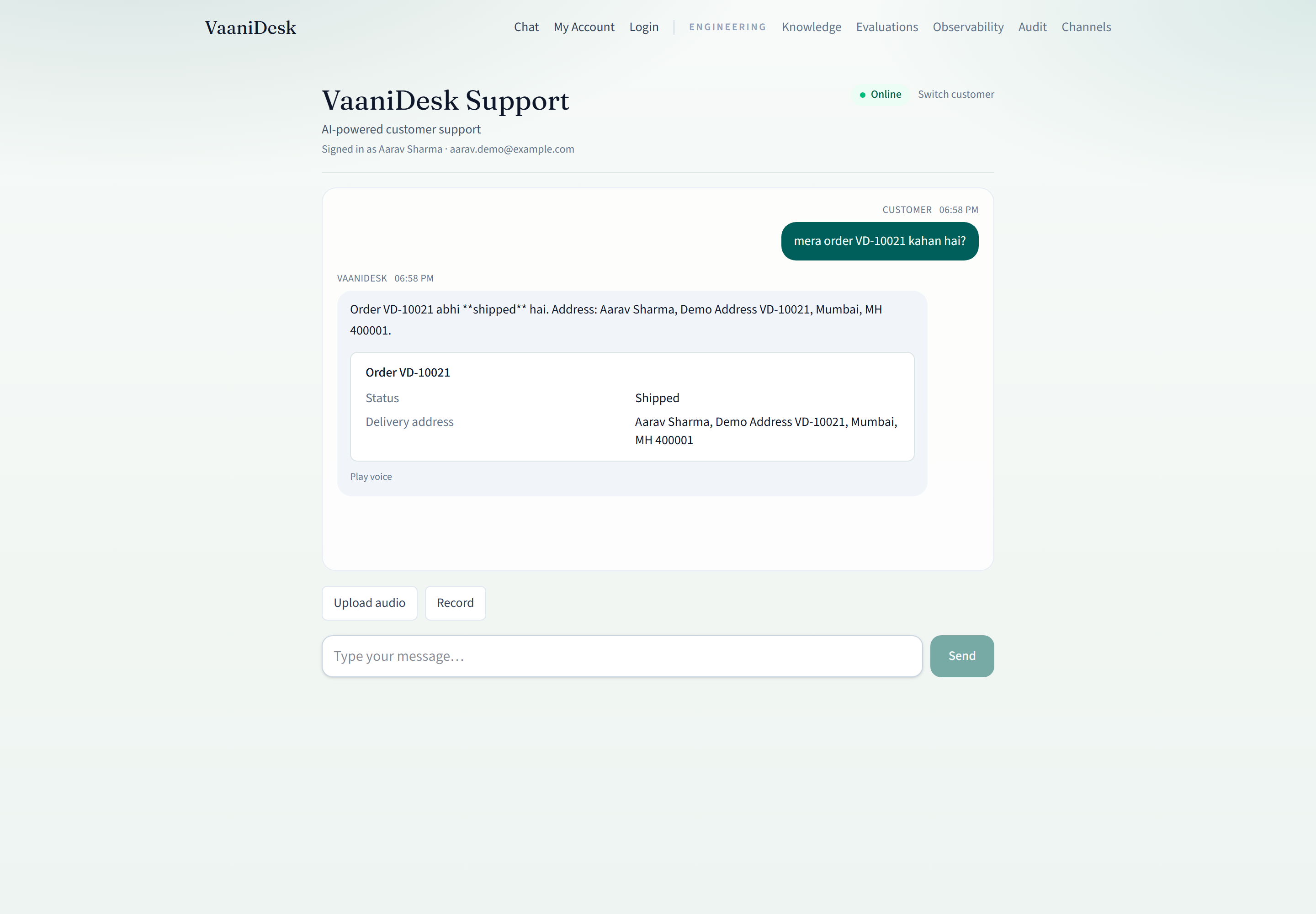
Language support covers English, Hindi, Hinglish, and Marathi, with routing and evaluation awareness for mixed-language customer interactions common in real support environments.
controlled agent workflow
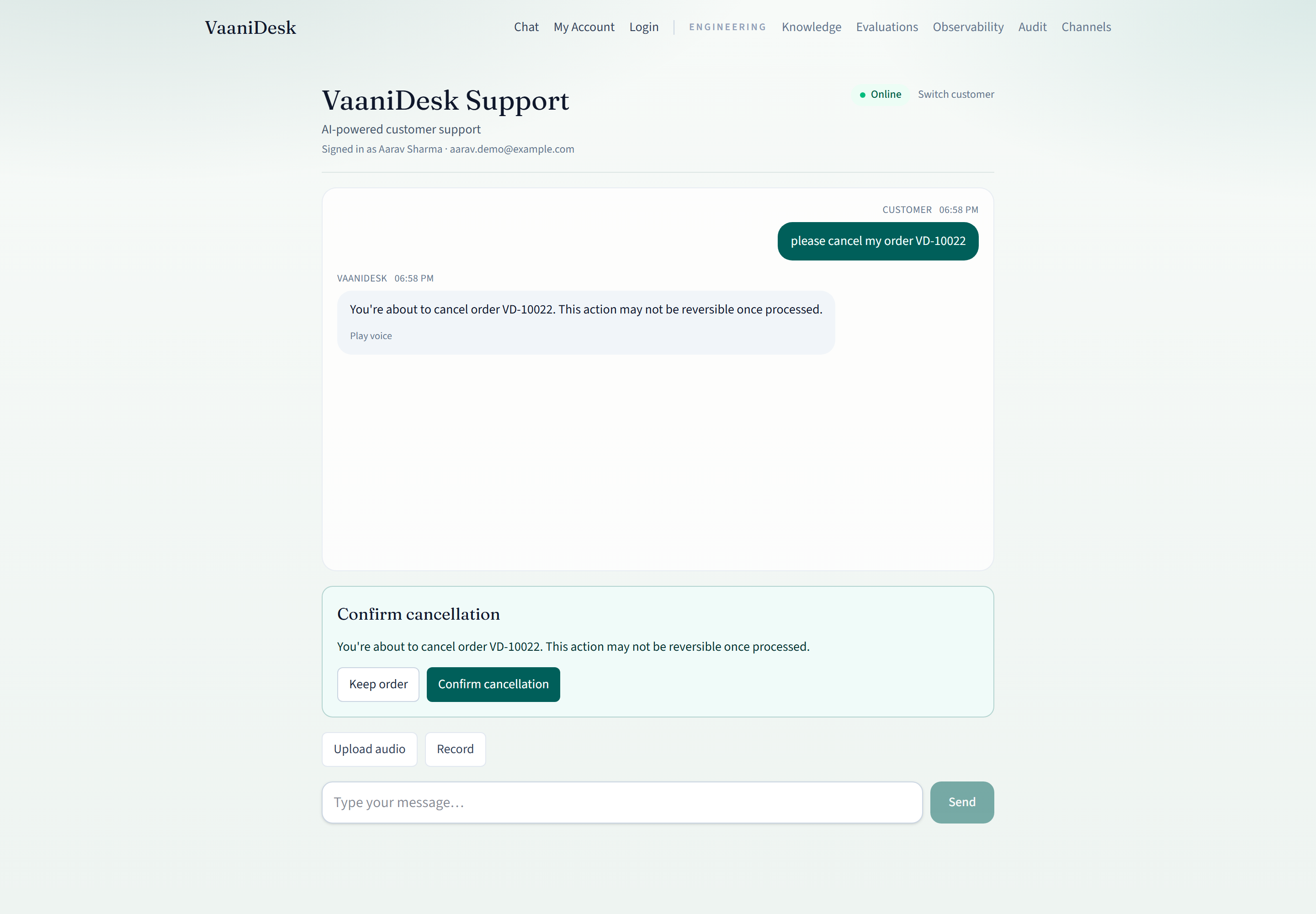
Agent behavior is constrained through structured workflows and controlled tool calling. Sensitive or destructive actions require confirmation rather than unconstrained autonomous execution.
business tools
The platform integrates business tools behind a gated execution model so the agent can act on real operational tasks while remaining within authorization and confirmation boundaries.
grounded retrieval / rag
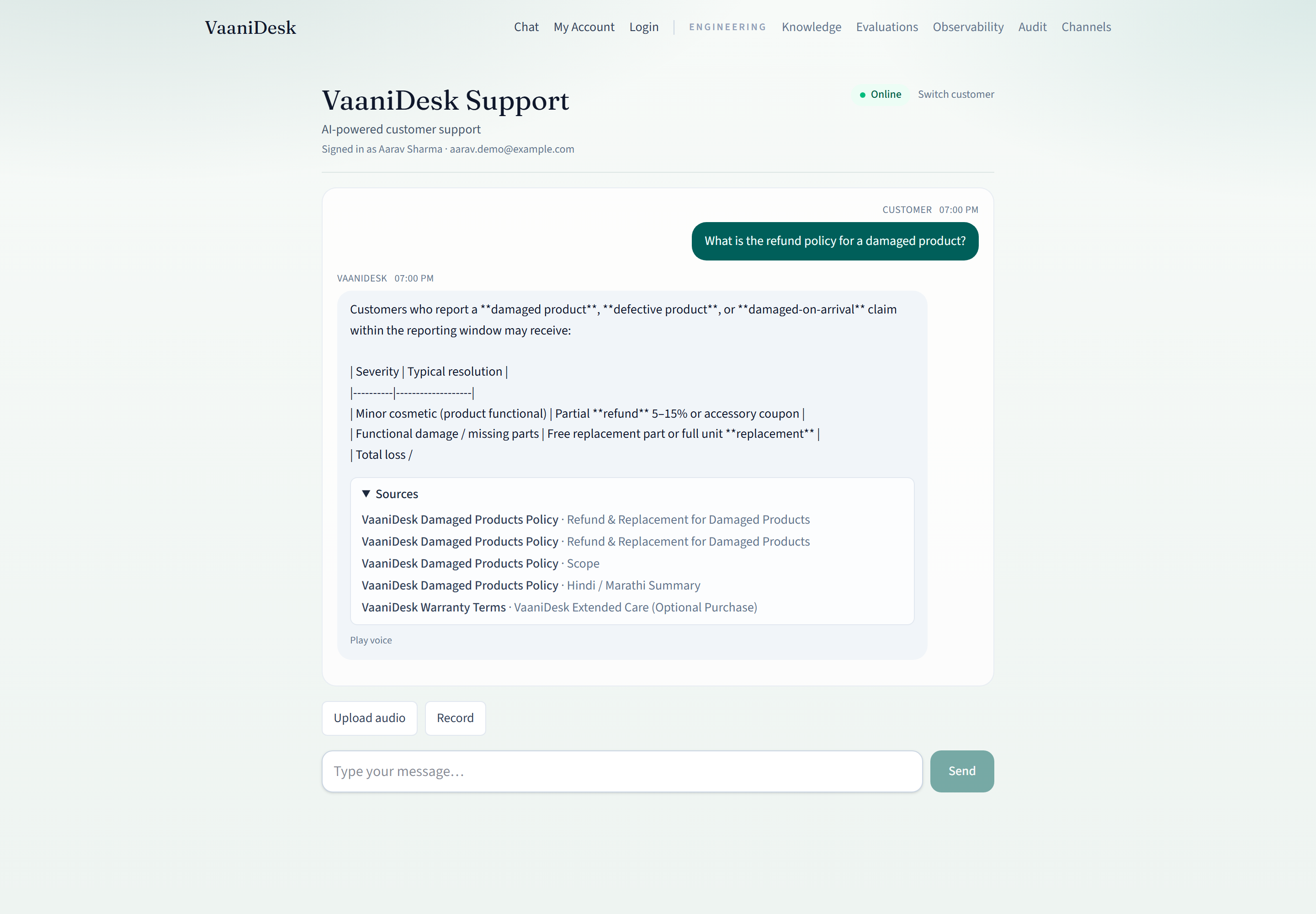
Retrieval combines hybrid search over PostgreSQL with pgvector, returning source citations so answers remain inspectable. This keeps model outputs grounded in indexed business knowledge rather than unconstrained generation alone.
security model
Security controls include authorization checks, idempotency for side-effecting operations, and prompt-injection defenses. Security-critical evaluation cases are part of the verified release metrics.
speech pipelines (optional)
Optional STT/TTS paths exist for speech-related support flows. Real external STT/TTS providers are credential-dependent; deterministic providers/simulators are used for local and CI verification. This is not a dedicated vision or image-analysis pipeline.
evaluation / verification
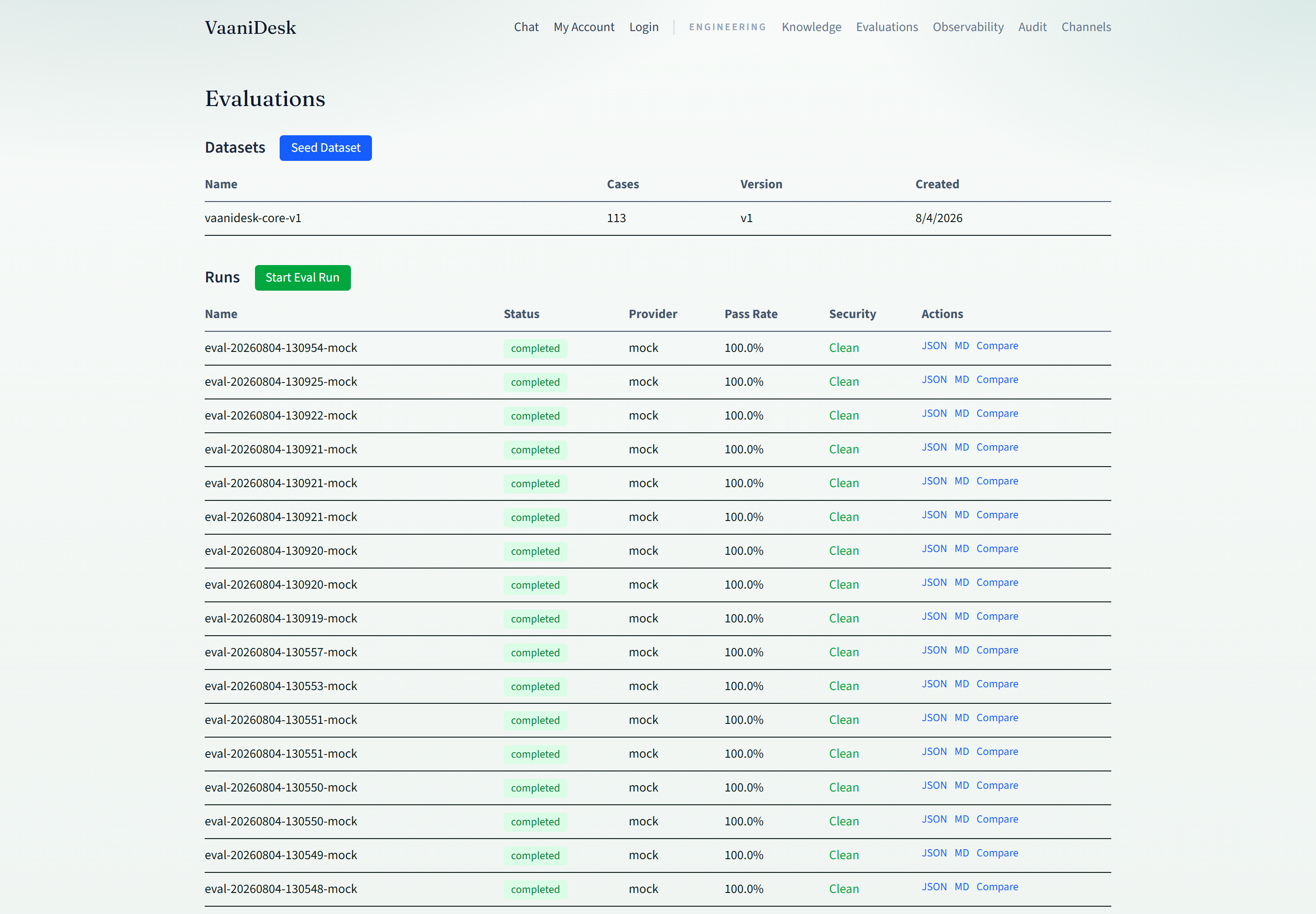
Evaluation is treated as a release gate. Verified v1.0.1 metrics include 113 deterministic evaluation cases passed, with 40 security-critical evaluations and 0 security failures.
observability
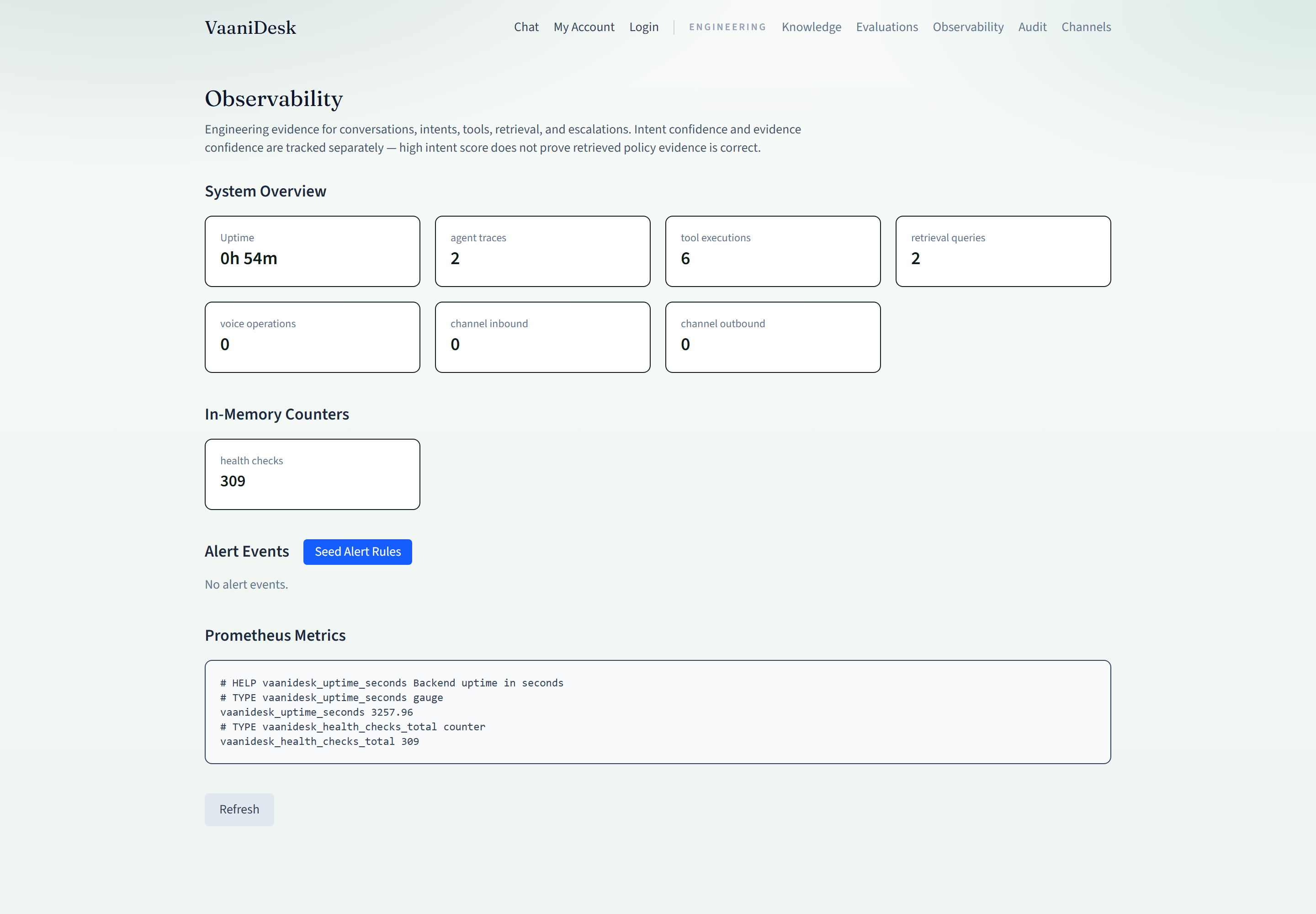
Operational visibility is built into the architecture so agent runs, tool calls, and retrieval behavior can be inspected during development and verification.
testing
The verification suite spans backend unit/integration tests, deterministic evaluation cases, Playwright end-to-end coverage, static typing with mypy, Docker health checks, migration cycles, seed idempotency, and secret scanning.
engineering verification
- Backend tests
- 206 passed · 0 failed · 0 skipped
- Deterministic evaluations
- 113 passed
- Security-critical evals
- 40 · 0 failures
- Playwright E2E
- 14 passed
- mypy
- Clean across 100 source files
- Release checks
- Docker · migrations · seed idempotency · secret scan
technology
Python · FastAPI · PostgreSQL · pgvector · Redis · Next.js · TypeScript · Docker · pytest · Playwright
Major areas
multilingual AI · English · Hindi · Hinglish · Marathi · controlled tool calling · sensitive action confirmation · hybrid RAG · pgvector · source citations · authorization · evaluations · observability · idempotency · prompt-injection defenses
limitations
- Real external LLM, STT/TTS, SMTP and WhatsApp integrations are optional and credential-dependent; deterministic providers/simulators are used for local and CI verification.
- Credential-dependent integrations are not presented as live in every deployment environment.
- An MCP server and a dedicated vision / image-analysis pipeline are not part of the shipped v1.0.1 surface.
what i learned
Shipping an AI support system as engineering work means treating evaluation, authorization, idempotency, and language edge cases as part of the product surface — not as demos bolted onto a model call. Controlled tool execution and hybrid retrieval with citations were essential to making agent behavior inspectable and safe enough for operational use cases.